
The Comprehensive Guide: The Virtue of the Holy Quran, the Importance of Learning and Memorizing It, and Its Impact on Life
Introduction: The Holy Quran is the eternal book of Allah and His enduring miracle. It is the light that has illuminated the paths of humanity, bringing it out from the darkness of ignorance and misguidance into the light of truth and guidance. Learning the Holy Quran, memorizing it, and contemplating its meanings is not merely a religious duty or a ritual we perform; rather, it is a way of life and an integrated approach that builds a person's character, refines their soul, and reforms their society.
In this comprehensive article, we will discuss in detail everything related to the Holy Quran, starting from its definition, moving through the importance of learning it and the virtues of memorizing it, and concluding with practical, effective steps that help a Muslim memorize the Book of Allah, relying on reliable sources from the Quran and the pure Prophetic Sunnah.
First: What is the Holy Quran?
The Holy Quran is the word of Allah Almighty, revealed to His Messenger Muhammad (peace be upon him) through the trustworthy Angel of Revelation, Gabriel (peace be upon him). It is written in the Mus-hafs (physical copies), transmitted to us by continuous and indisputable chains of narration (Mutawatir), and reciting it is an act of worship. It begins with Surah Al-Fatihah and ends with Surah An-Nas.
Allah Almighty has guaranteed the preservation of this great book from any alteration or distortion, as stated in His saying: {Indeed, it is We who sent down the Quran and indeed, We will be its guardian} [Al-Hijr: 9]. It is the constitution that organizes a Muslim's life in all its doctrinal, legislative, and moral aspects.
Second: The Virtue and Importance of Learning the Holy Quran
Learning the Holy Quran is among the most honorable and highly esteemed sciences, as every science is honored by the nobility of its subject, and there is no subject more honorable than the word of the Lord of the Worlds. The importance of learning the Quran is evident in several aspects:
1. Absolute Goodness
The Prophet (peace be upon him) affirmed absolute goodness and superiority for those who learn the Quran and teach it to others. Uthman bin Affan (may Allah be pleased with him) narrated that the Prophet (peace be upon him) said: "The best among you are those who learn the Quran and teach it." (Narrated by Al-Bukhari). This goodness encompasses both this world and the Hereafter, placing the companion of the Quran in the highest ranks of honor and elevation.
2. Intercession on the Day of Resurrection
On a day when every nursing mother will forget her nursing child, the Holy Quran will come as an advocate and defender for its companion. The Messenger of Allah (peace be upon him) said: "Read the Quran, for it will come as an intercessor for its reciters on the Day of Resurrection." (Narrated by Muslim).
3. Psychological Tranquility and Peace
In an era filled with stress and psychological ailments, the Holy Quran offers the perfect and only cure for a constricted chest. Allah Almighty says: {Unquestionably, by the remembrance of Allah hearts are assured.} [Ar-Ra'd: 28]. Reciting the Quran and contemplating its verses brings tranquility to the soul, removes worries, and envelops the reciter in Allah's mercy, as stated in the noble Hadith that when a people gather to recite the Book of Allah, tranquility descends upon them and mercy envelops them.
4. Multiplication of Good Deeds
A Muslim's trade with the Quran is a trade that will never fail. For every letter a Muslim reads from the Book of Allah, they receive a good deed, and a good deed is multiplied by ten. The Messenger of Allah (peace be upon him) said: "Whoever reads a letter from the Book of Allah, he will have a reward. And that reward will be multiplied by ten. I am not saying that 'Alif, Laam, Meem' is a letter, rather I am saying that 'Alif' is a letter, 'laam' is a letter and 'meem' is a letter." (Narrated by At-Tirmidhi).
Third: The Virtue of Memorizing the Holy Quran and the Status of the Memorizer
Memorizing the Holy Quran in one's heart is one of the greatest acts of worship by which a servant draws closer to their Lord, and it has countless virtues in this world and the Hereafter:
Ascending in the Degrees of Paradise: On the Day of Resurrection, people's ranks will vary according to their deeds, and the memorizer of the Quran will hold an exceptional position. The Prophet (peace be upon him) said: "It will be said to the companion of the Quran: Read and elevate (through the levels of Paradise) and beautify your voice as you used to do when you were in the worldly life! For verily, your position in Paradise will be at the last verse you recite!" (Narrated by Abu Dawud and At-Tirmidhi).
With the Noble and Obedient Scribes (Angels): The one who memorizes the Quran and recites it proficiently will be in the company of the nearest angels. The Prophet (peace be upon him) said: "The one who is proficient in the recitation of the Quran will be with the honorable and obedient scribes (angels), and he who recites the Quran and finds it difficult to recite, doing his best to recite it in the best way possible, will have two rewards." (Narrated by Muslim).
Honoring Parents on the Day of Resurrection: One of the greatest things a child can offer their parents is memorizing the Quran. The parents of a Quran memorizer will be crowned and clothed in garments of light on the Day of Resurrection that the whole world could not afford, honoring them for raising their child upon the table of the Quran.
Preserving the Mind and Memory: Scientific studies and real-life experiences have proven that those who memorize the Holy Quran are the least prone to diseases of aging and memory loss (Alzheimer's). Engaging the mind in continuous memorization and review keeps brain cells in a state of constant activity, which positively reflects on the memorizer's mental health.
Fourth: The Impact of the Holy Quran on the Individual and Society
The Holy Quran is not merely a book read for blessings; it is a way of life that creates radical change in both the individual and society:
The Impact of the Quran on the Individual:
Building Correct Belief: The Quran establishes faith in Allah and His Oneness in the Muslim's heart, introducing them to His attributes and names, making them a balanced person who relies on their Creator in all affairs.
Moral Uprightness: The Quran encourages noble morals such as honesty, trustworthiness, righteousness, and justice, and forbids vices such as oppression, lying, and backbiting. When Aisha (may Allah be pleased with her) was asked about the character of the Prophet (peace be upon him), she said: "His character was the Quran."
Straightening the Arabic Tongue: Continuous reading of the Quran straightens the reciter's tongue, making them eloquent and proficient in Arabic grammar and the articulation points of letters.
The Impact of the Quran on Society:
Cohesion and Solidarity: The Quran calls for compassion and empathy among members of society, and for the care of orphans and the needy, which builds a cohesive society with no room for classism or injustice.
Establishing Principles of Justice and Equality: The Quran regulates transactions between people in buying and selling, inheritance, marriage, and divorce, with divine laws that guarantee the rights of everyone and prevent transgression.
Social Security: A society whose children are raised on the Quran is a safe society where crime and deviance rates decrease, because the internal monitor (the fear of Allah) is strongly present in individuals' souls.
Fifth: Practical and Proven Steps to Memorize the Holy Quran Easily
Many people wish to memorize the Quran but face difficulties in starting or maintaining consistency. To overcome these obstacles, you can follow these systematic steps:
Sincere Intention to Allah Almighty: The first and most important step is that the goal of memorization should be to attain the pleasure of Allah and win His reward, not for showing off or seeking a reputation among people.
Supplication and Persistence in It: Seeking Allah's help is imperative, for memorization is a success granted by Allah. Be sure to supplicate during times when prayers are answered, asking Allah to facilitate the memorization of His book and to firmly establish it in your heart.
Choosing the Right Time and Place: The best time for memorization is at dawn and shortly after, when the mind is clear and the body is rested. It is also preferable to choose a quiet place away from distractions and noise.
Setting a Daily Amount (Consistent Portion): "A small continuous deed is better than a large interrupted one." Set a manageable daily amount for memorization (e.g., half a page or one page) and stick to it regardless of the circumstances. Consistency is the key to success.
Standardizing the Quran Edition: Visual memory relies heavily on the layout of the page and the position of the verses during memorization. Therefore, it is essential to rely on a single edition of the Mus-haf (such as the Madinah Mus-haf) and not change it.
Correction Before Memorization (Receiving): Do not memorize alone to avoid memorizing words incorrectly. The verses to be memorized must be read to a proficient teacher or listened to from a master reciter via audio applications before you begin repeating them.
Understanding is the Path to Memorization: Reading a simplified explanation (Tafsir) of the verses and knowing the reasons for their revelation connects the meanings in the mind, making memorization easier and more deeply rooted. You can use accessible Tafsir books like "Al-Tafsir Al-Muyassar" or "Tafsir As-Sa'di."
Periodic Review (Commitment): The Quran easily escapes memory if not reviewed. The Prophet (peace be upon him) said: "Commit yourselves to the Quran, for by Him in whose Hand is my soul, it is faster in slipping away than a tied camel." (Agreed upon). Allocate time for review that exceeds the time spent on new memorization.
Reciting What You Memorize in Prayer: One of the most powerful ways to solidify memorization is to recite the newly memorized verses during the five daily prayers and the voluntary prayers (Sunnah), especially during the night prayer (Qiyam Al-Layl).
Sixth: Etiquette of Reciting and Memorizing the Holy Quran
The Book of Allah has a sanctity and holiness that requires its reciter and memorizer to adhere to a set of etiquettes that magnify the rites of Allah in their heart:
Purity: It is recommended for a Muslim to read the Quran while in a state of complete purity (Wudu) and facing the Qiblah.
Seeking Refuge and Bismillah: Starting by saying "I seek refuge in Allah from the accursed Satan" (Isti'adhah) and then "In the name of Allah, the Entirely Merciful, the Especially Merciful" (Basmalah) at the beginning of a Surah.
Contemplation and Reverence: To read reflectively. If one passes by a verse of punishment, they seek refuge in Allah, and if they pass by a verse of mercy, they ask Allah of His bounty.
Beautifying the Voice: Adorning the Quran with a beautiful voice without unnatural exertion. The Prophet (peace be upon him) said: "Beautify the Quran with your voices."
Acting Upon It: This is the ultimate goal. There is no good in memorizing the letters while violating the boundaries. The memorizer must be a walking Quran on earth in their behavior and morals.
Seventh: The Role of Modern Technology in Learning and Memorizing the Quran
In the modern era, difficulties have been smoothed out, and avenues of learning have become accessible to everyone, by the grace of Allah and then technology. It is no longer a requirement to go to the mosque to learn; the mosque now comes to you:
Smartphone Applications: There are hundreds of reliable apps that provide the Holy Quran in written and audio formats by prominent reciters, featuring options to loop verses to aid memorization, as well as providing exegesis and translations.
Electronic Reciters (Maqari'): Online platforms allow a Muslim from anywhere in the world to recite the Quran, correct their recitation, and recite from memory to certified teachers via voice and video calls.
Radio Programs and Podcasts: Continuously listening to the Quran, Tafsir programs, and Quranic sciences online helps keep a Muslim connected to the Book of their Lord during their free time or while driving.
Eighth: Challenges Facing Quran Learners and How to Overcome Them
In the journey of memorizing the Quran, a Muslim may face some challenges and obstacles, including:
Lethargy and Laziness: A person might start with enthusiasm and then lose motivation. The Solution: Renewing intentions, reading the biographies of righteous predecessors and their dedication to the Quran, and seeking good company (a memorization circle) that encourages and competes with them in goodness.
Frequent Forgetting: The Solution: Realizing that forgetting is human nature, and the solution lies in strict daily review, linking verses to their meanings, and frequently praying with what has been memorized.
Lack of Time: The Solution: The blessing in the Quran is wondrous. Whoever gives the Quran a portion of their time, Allah blesses the rest of their day. Sincerely set aside just half an hour daily, and you will see how the rest of your tasks become easier.
Conclusion
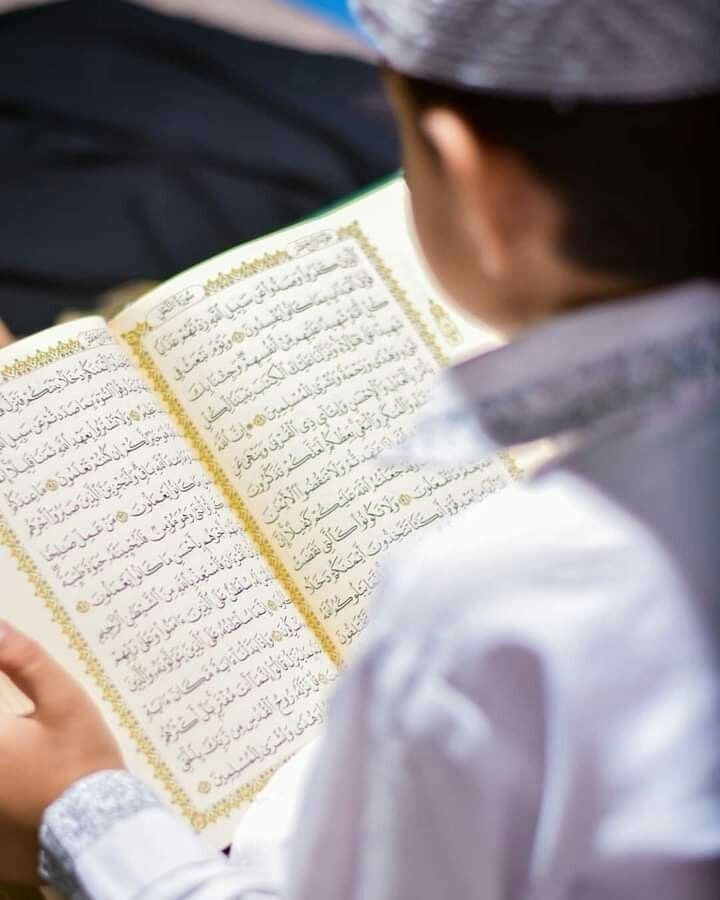
The journey of learning and memorizing the Holy Quran is the most enjoyable journey a person can experience in their life. It is a journey surrounded by angels, where tranquility descends, and ranks are elevated. The Quran is not exclusive to a certain age or a specific group; how many elderly people have completed its memorization, and how many young children have mastered its recitation!
The secret lies in sincere willpower, turning to Allah Almighty, consistency, and perseverance. Make today a new starting point to strengthen your relationship with the Book of Allah; through reading, learning, memorization, contemplation, and action. Always remember that the effort you put in today to recite and solidify the Quran is your most enduring asset, which you will find you need most on the day you stand before Allah Almighty. We ask Allah to make us and you among the people of the Quran, who are the people of Allah and His chosen ones.